EMT Practice Test

1. Question Content...


Question List

Question1: A network administrator configures several HP Comware switches to be part of a single Intelligent Resilient Framework (IRF) virtual device. What is correct about the domain and member IDs in this configuration?

Question2: Which HP Comware term defines the untagged VLAN on a trunk port that is commonly used for network management traffic?

Question3: Refer to the exhibit.

The exhibit shows partial output of the HP Comware display ip routing-table command. Note the Pre or preference column.
On an HP ProVision switch, what is the corresponding term used for the Pre column in the Comware output shown in the exhibit?

Question4: An HP Provision switch has port A1 connected to port g1/0/1 of an HP Comware switch. The ProVision port has the following configuration: vlan 1 untag A1 vlan 10 tag A1 vlan 20 tag A1
Which Comware configuration will allow the three VLANs to successfully pass traffic between the two switches?

Question5: Refer to the exhibit.

What can a network administrator determine from the output in the exhibit?

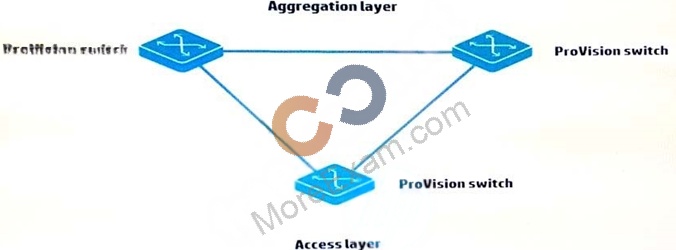
Question6: A company wants to implement HP Intelligent Resilient Framework (IRF) at the access layer. Which switches could they use?

Question7: Refer to the exhibit.

The network administrator has configured this port to permit all VLANs. The output in the exhibit indicates that the port is only passing VLANs 1 and 11. The administrator wants the port to pass VLAN 12 as well.
What should the administrator do to accomplish this?

Question8: Which statement correctly defines the management capabilities of an HP MultiService Mobility (MSM) access point (AP)?

Question9: Refer to the exhibit.

The topology shown in this exhibit implements Multiple Spanning Tree Protocol (MSTP), where all the switches are in the same region.
How many MSTP instances, besides the Internal Spanning Tree (IST) or instance 0, does this network need in order to have effective load sharing on the uplinks from the access switches?

Question10: A customer has an HP ProVision switch capable of Layer 3 forwarding: however, Layer 3 forwarding is disabled. The switch has an IP address in the management VLAN, where the default gateway is 10.1.1.1, which ProVision command should the network administrator use so the ProVision switch can access the Intelligent Management Center (IMC) server in a different VLAN?

Question11: A company has a policy that requires all administrators to use secure access for in-band management. The administrator sets up SSH access on the HP Comware switches in the network to meet this requirement. The administrator enables SSH, and creates SSH keys and administrator accounts on the Comware switches. Every time the administrator attempts to log in to the switches the SSH access is denied. The VTYs are configured as:
user-interface vty 0 15
authentication-mode password
user privilege level 3
quit
What is the correct authentication mode the administrator must configure on the VTYs of the Comware switch so the switch prompts for usernames and passwords?

Question12: What is a valid reason to choose an 802.11a wireless implementation?

Question13: What is the maximum number of active links supported between a device and HP ProVision switches when distributed trunking is used to connect the device to the ProVision switches?

Question14: Where is priority information stored in an Ethernet frame?

Question15: Refer to the exhibit.

Switch-1 is an HP ProVision switch.
A network administrator wants Switch-1 to run Open Shortest Path First (OSPF) and create neighbor relationship on Links 1 and 2. What should the administrator do to accomplish this?

Question16: A company needs a two-member Intelligent Resilient Framework (IRF) virtual switch. The network administrator is configuring IRF member 2 that will connect to port 1/1 on IRF member 1. What is the correct IRF port ID for member 2?

Question17: Which ProVision configuration includes 10.0.3.0/24, which represents VLAN 30 in OSPF area 0?

Question18: When configuring Multiple Spanning Tree Protocol (MSTP), how should VLANs be separated to perform load balancing?

Question19: A mid-sized company purchases HP Intelligent Management (IMC) to manage 500 nodes. In addition to the base platform, the company purchases the UAM, WSM, and NTA modules. Which deployment method should this company use to install their IMC base platform and modules?

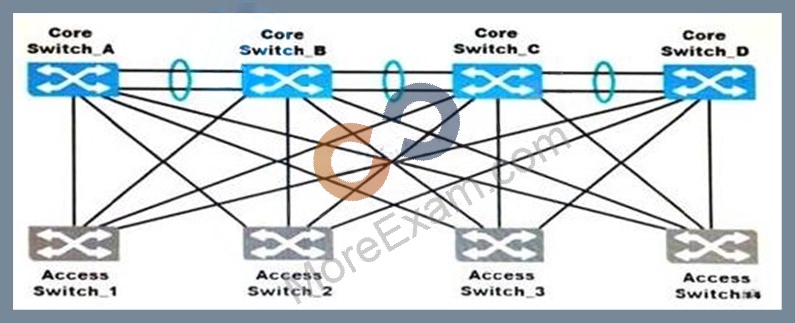
Question20: Refer to the exhibit.

All four switches run MSTP. Switch_A, Switch_B, and Switch_C are configured with this MSTP information:
-Config name = "Region 1"
-Revision number= 1
-
Instance 1 = VLANs 10, 12
-
Instance 2 = VLANs 11, 13
-IST instance = VLANs 1-9, 14-4094
Switch_D is configured with this MSTP information:
-Config name = "Region1"
-Revision number= 1
-
Instance 1 = VLANs 10, 12
-
Instance 2 = VLANs 11, 13, 14, 15
-IST instance = VLANs 1-9, 16-4094
Based on this information, what is the result of this MSTP configuration?

Question21: A network administrator wants to establish an LACP link aggregation between an HP Comware switch and an HP ProVision switch. Which settings should the administrator configure?

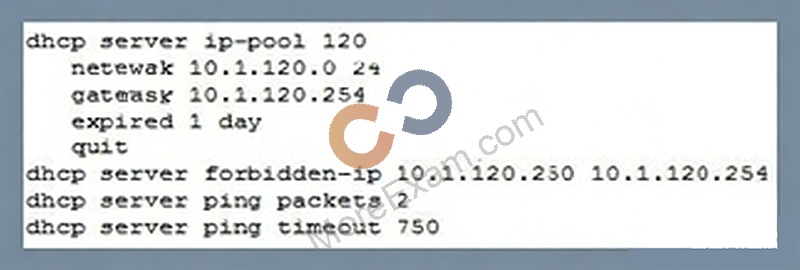
Question22: A network administrator adds a new VLAN in a campus network, VI.AN 120. The administrator needs to set up a DHCP scope for this VLAN. The scope will include an IP address for DHCP clients and a default gateway address. An HP Comware aggregation layer switch acts as a DHCP server for this VLANs at the access layer. The administrator configures this on the Comware switch for the new DHCP scope:

Based on this configuration, what else must the administrator configure to make the pool available to DHCP clients that send requests in VLAN 120?

Question23: Which HP device or port type can modify, read, and respond with frames that include 802.1Q VLAN tags?

Question24: Which HP solution provides network optimization and automated network provisioning to its customers?

Question25: Refer to the exhibit.

A network administrator wants to create a routed topology that ensures redundant connections between User Group 1 and User Group 2. Based on this information, how many broadcast domains should the administrator create?

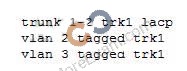
Question26: A network administrator establishes an aggregated link between an HP Comware and ProVision switch. VLAN 1 is untagged and VLANs 2 and 3 are tagged. The administrator configures these commands on the Comware switch:

The administrator configures theses commands on the ProVision switch:

Some of the links in the aggregated link become blocked.
Which Comware configuration should the administrator apply to the Comware switch to resolve this issue?

Question27: Refer to the exhibit.

Examine the HP Comware switch output shown in the exhibit. Based on this output, what is a correct description of the IRF topology with which this switch is associated?

Question28: Refer to the exhibit.

MSTP is configured on all switches shown in the exhibit. The Comware-1, Comware-3, and Comware-4 switches are set up for OSPF. Comware-1 and Comware-4 switches fail to achieve neighbor adjacency. The network administrator analyzes the issue and determines that MSTP is blocking on port gigabitethernet1/0/2 on Comware-1.
Which configuration should the administrator configure on ports g1/0/1 and g1/0/2 to allow Comware-1 to form the correct OSPF adjacencies with Comware-3 and Comware-4?

Question29: Refer to the exhibit.

The physical interfaces for Comware-1 and Comware-2 switches in the exhibit are configured in
routed mode and OSPF. Both switches have the three subnets in their routing tables. The administrator wants to use DHCP to assign addressing information to the users. Based on the exhibit, where should the administrator configure DHCP relay?

Question30: Refer to the exhibit.

A network administrator sets up OSPF in part of the network topology shown in the exhibit. The Comware-1 switch is already configured. The administrator needs to configure ProVision-1 so that:
-OSPF includes VLANs 10 and 20 in the routing process.
-
The router ID of 1.1.1.1 is assigned to the switch.
-
The ProVision-1 switch can successfully build a neighbor adjacency with the Comware-1 switch.
Which configuration should the administrator apply to the ProVision-1 switch to meet these requirements?

Question31: A network administrator plans to execute show commands as well as make conjuration changes. Which HP ProVision privilege role must be assigned to an account for the administrator to do this?

Question32: Refer to the exhibit.

Based on the topology shown in the exhibit, which symptom does a network administrator see if
the HP switches are in their factory default states?

Question33: When adding a new member to an existing IRF domain, which of the following must you perform first?

Question34: Refer to the exhibit.

Based on the output shown in this exhibit, which statement is true about the 10.0.0.2 neighbor?

Question35: Which methods can a network administrator use to upgrade the operating system of an HP ProVision switch? (Select two.)

Question36: Which HP software platform provides centralized network management, monitoring, and configuration of wired and wireless network infrastructure devices, as well as traffic monitoring, user management, and other capabilities?

Question37: Refer to the exhibit.

Which endpoint or endpoints receive broadcast ARP requests sent by EndpointA?

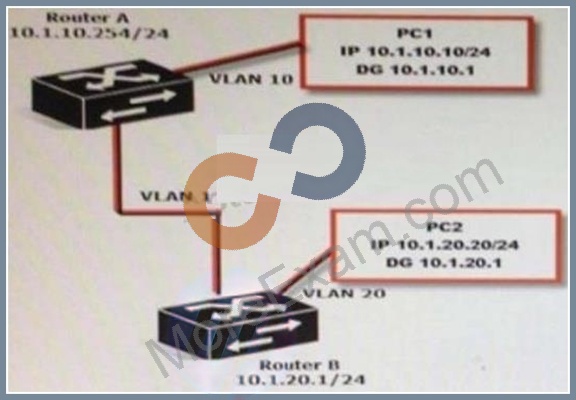
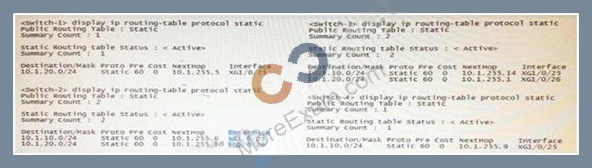
Question38: Refer to the exhibit.
Exhibit: Network diagram and routing tables


Why does traffic from PC1 fail to reach PC2?

Question39: Which command can a network administrator execute on an HP Comware switch to manage configuration files?

Question40: On an HP Comware switch, which view must an administrator access in order to execute the debug command?

Question41: A company wants a modular switch for the access layer at its main campus and for several branch offices. Which HP Switch Series is best suited for this role?

Question42: Refer to the exhibit.
Exhibit: HP Comware switch configuration

Based on the exhibit output, which type of link aggregation is this?

Question43: What is the purpose of a management VLAN on an HP Provision switch?
Question44: Refer to the exhibits.
Exhibit 1

Exhibit 2

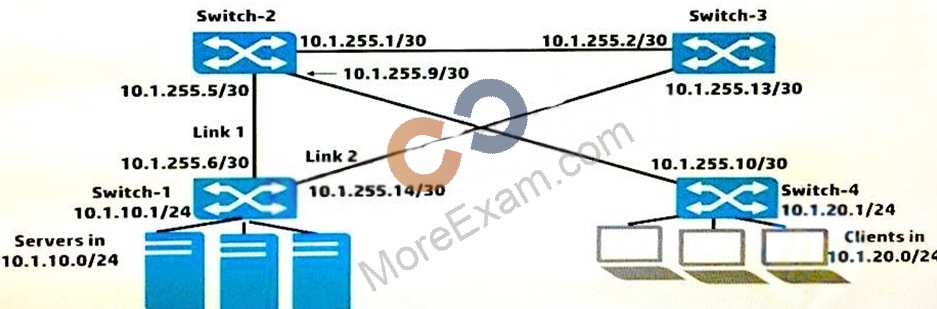
All of the switches in Exhibit 1 are routing switches. Exhibit 2 shows the routes configured on these switches. The direct (connected) routes are not shown, but assume that links are configured with the IP addresses shown in Exhibit 1.
The network administrator wants to protect communications between clients and servers in case Link 1 fails. What should the administrator do to protect these communications in this failover situation?

Question45: A company has a network comprised of HP Comware and ProVision switches. A network administrator purchases HP Intelligent Management Center (IMC) to manage the switches in this network. Which step must the administrator perform on the Comware switches but not on the ProVision switches?

Question46: How does a switch treat a link aggregation?
Question47: What is one difference between Network Segment-based discovery and ARP-based discovery on HP Intelligent Management Center (IMC)?

Question48: Which settings enable a network administrator to use terminal emulation software to interface with an HP Comware switch's auxiliary port?

Question49: A customer is implementing a network using HP ProVision switches. Which default setting applies to the ProVision switches?

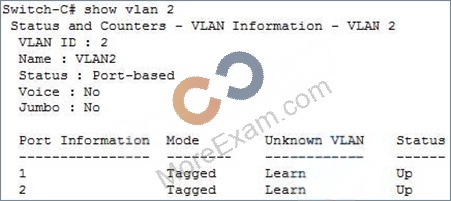
Question50: Refer to the exhibits.
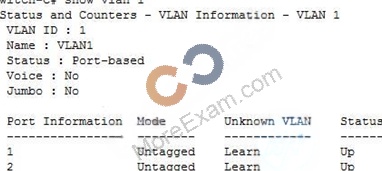
Exhibit 1

Exhibit 2

A network administrator executes the show vlan commands and sees the output shown in the exhibits. How must the administrator configure a connected port on an HP Comware switch?

Question51: Which credential is required to validate SNMPv2c write requests?

Question52: A network administrator configures OSPF in an HP ProVision based network. The administrator is concerned that a rogue device might connect to an access layer switch and introduce OSPF routes to the company's routing topology.
The access VLANs do not contain additional routers.
Which configuration should the administrator apply for these access VLANs to prevent them from forming an adjacency with rogue devices?

Question53: A network administrator is configuring a static route. What should the administrator use as the next hop address?

Question54: How does Open Shortest Path First (OSPF) help enterprises meet their high availability requirements, compared to RIP?

Question55: An endpoint device requests an address by using DHCP. What is the first message the client sends to initiate this process?

Question56: Refer to the Exhibit.

Originally, all four switches had the same region configuration. VLAN 14 was added to Switch_D and then mapped to instance 2. How does this affect the Multiple Spanning Tree Protocol (MSTP) topology?

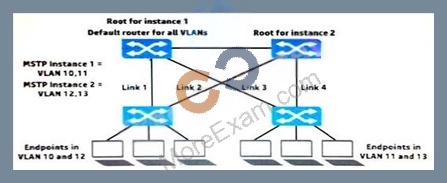
Question57: Refer to the exhibit.

The network administrator is setting up Multiple Spanning Tree Protocol (MSTP) with the settings shown in the exhibit. All the switches are in the same region. The administrator has requested help determining which VLANs each switch-to-switch link should carry. What is a recommendation for this topology?

Question58: A network administrator configures this command on an HP ProVision switch:
vlan 30 ip helper-address 10.0.3.253
The switch is able to ping 10.0.3.253. After the administrator configures the command, users in VLAN 30 report that their PCs fall to acquire addresses using DHCP.
What should the administrator ensure?

Question59: Refer to the exhibit.

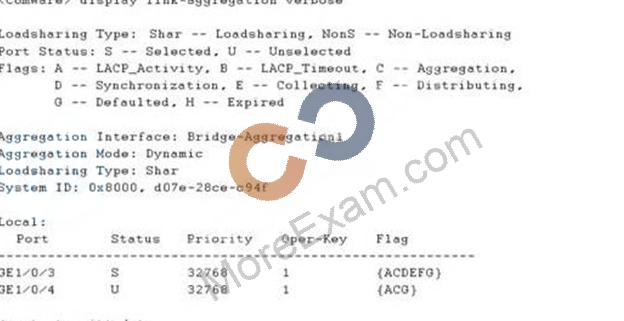
A network administrator has implemented link aggregation on an HP Comware switch using LACP. The two ports are functioning at the data link layer between the Comware switch and its neighboring switch. The administrator executes the display link-aggregation verbose command and notices the flags shown in the exhibit.
What does this indicate?

Question60: Refer to the exhibits. Exhibit 1

Exhibit 2

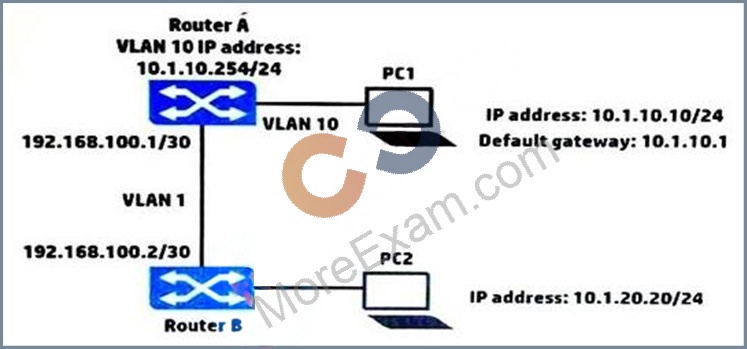
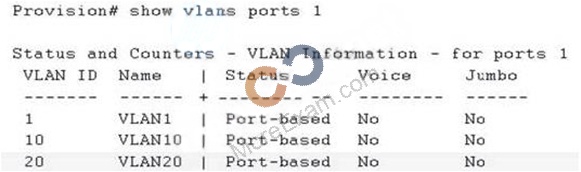
PC1 cannot reach PC2. Based on the exhibits, what could be causing this error?

Question61: Refer to Exhibit.

The server shown in the exhibit requires redundant links, and The link aggregation should use LACP. What should the administrator configure on the 1RF virtual switch?

Question62: An HP Comware switch should send messages to an SNMP server when various events occur.
What is one step in the configuration of this feature?

Question63: Which privilege level would a network administrator use to configure an HP ProVision switch?

Question64: A network administrator wants to join a switch to an Intelligent Resilient Framework (IRF) virtual device. The administrator changes the switch member ID from 1 to 2. What must the administrator do before configuring the IRF port on this switch?

Question65: Which security benefit does SNMPv3 offer that SNMPv2 does not offer?

Question66: What is one reason to access the extended boot menu on an HP Cornware switch?

Question67: Refer to the exhibit.

This switch currently assigns all VLANs to Multiple Spanning Tree Protocol (MSTP) instance 0 or the Internal Spanning Tree (IST). Which statement correctly describes interface 21?

Question68: A network administrator has copied new software to an HP ProVision switch and placed this software in the secondary flash location. The switch is currently booting from the primary flash location. The administrator wants the switch to start using the new software.
What should the administrator do to accomplish this?

Question69: Which HP solution delivers automated virtual machine orchestrator, automatic synchronization of network connectivity information, and visibility to performance of wired and wireless users?

Question70: What is one feature that MSTP has that RSTP does not have?
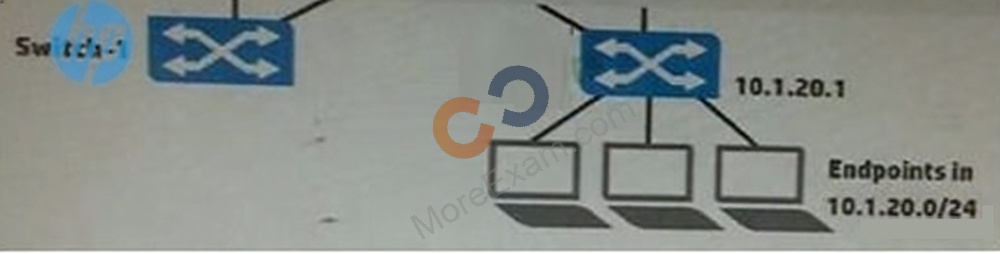
Question71: Exhibit1.

Exhibit 2

A network administrator wants to create a backup IP route to 10.1.20.0/24 on Switch-1. The backup route should use Link 2, and it should only be used if Link 1 is down. What is the correct setup to accomplish this?

Question72: Refer to the Exhibit.

Examine the output from the Comware command shown in the exhibit. Based on the flag of ACDEF, what is the status of the aggregated link?

Question73: A network administrator needs to restrict access to the console port of an HPE Comware switch. When a user connects to the console port and opens a terminal session, the switch should prompt the user for a password. How should the administrator configure user interfaces on the Comware switch?

Question74: A network administrator executes these commands on an HP ProVision switch:
ProVision(config)# ip route 10.1.100.0/24 10.1.1.1
ProVision(config)# ip route 10.1.200.0/24 10.1.1.1
The administrator attempts to ping a device in the 10.1.100.0/24 network from a client attached to the switch and is unable to ping it. Assume there are no firewalls and all other settings are correct. What must the administrator configure on the ProVision switch to get a response?

Question75: Refer to the exhibit.

A network administrator is upgrading the operating system on an HP Comware switch. When copying the new image from a TFTP server to the flash of the switch, the process fails because there is not enough flash to store the new operating system. The new operating system is 3.2MB in size. The administrator then executes the commands shown in the exhibit above.
Which action should the administrator perform to solve this problem?

Question76: Refer to the exhibit.

An HP Comware switch is using its default user-interface settings. The network administrator then enters the commands shown in the exhibit. What correctly describes how an admin user must now log in?

Question77: Refer to the Exhibit.
Exhibit: HP Comware switch configuration.
[Comware] vlan 100 [Comware-vlan100] quit [Comware] vlan 200 [Comware-vlan200] quit [Comware] interface g1/0/22 [Comware-GigabitEthernet1/0/22] port link-type trunk [Comware-GigabitEthernet1/0/22] port trunk permit vlan 100 200 [Comware-GigabitEthernet1/0/22] quit
A network administrator configures the Comware switch, as shown in the exhibit. The network administrator then connects a cable from the Comware's g1/0/22 interface to port 5 on an HP ProVision switch. Which configuration will successfully establish connection for VLAN 1, 100, and 200 between the two switches?

Question78: An HP ProVision switch is operating at its factory default settings. A network administrator connects the switch to a VLAN with a DHCP server. The switch-to-switch connection is carrying untagged traffic. The administrator wants to log in to the switch CLI using Telnet.
How should the administrator contact the switch and log in?

Question79: Refer to the exhibit.

A network administrator enters the command shown in the exhibit to check the VLANs on an HP ProVision switch interface. The administrator wants to discover which VLANs are tagged and untagged on the port. What can the administrator do to accomplish this?

Question80: A customer is implementing an access layer solution with four HP Comware switches in an Intelligent Resilient Framework (IRF) virtual device or domain. The customer expects to add two additional switches of the same model and would like to add them to the existing IRF virtual device. What must the customer verify?

Question81: What is one difference between the 802.11g and 802.11n standards?

Question82: Refer to the exhibit.

The switches in the exhibit are all HP Comware switches that run Multiple Spanning Tree Protocol (MSTP).
The network administrator wants to ensure that each switch-to-switch link is in its own subnet. The administrator also wants to make sure that all of the links are available for routing during normal operation. How should the administrator configure the physical switch-to-switch interfaces to accomplish these goals?

Question83: A network administrator enters this command on an HP ProVision switch with IP routing enabled:
ip route 0.0.0.0/0 10.1.1.1 metric 10 distance 10
This is the only IP route to 0.0.0.0/0 on the switch. What is the effect?

Question84: A network administrator wants to disable physical interfaces 13-24 on an HP ProVision switch. How can the administrator do this?

Question85: A server connects to a port on an HP Comware switch. The network administrator wants to ensure that:
the port remains forwarding during Multiple Spanning Tree Protocol (MSTP) topology changes,
and
changes in the port status do not cause MSTP topology changes.
Which statement describes how the administrator can accomplish this?

Question86: A network administrator enters this command on an HP Comware switch:
<Comware> save In interactive mode, the administrator is prompted to save to a file named config.cfg and confirms the save. What is the effect of these actions?

Question87: Which method of link aggregation do both HP ProVision and Comware switches support?
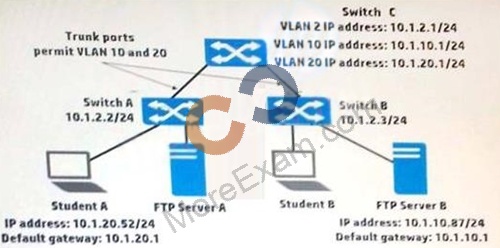
Question88: Refer to the exhibit.

Assume that Student A's ARP table is empty. Student A is preparing to send an FTP packet to FTP Server B and needs to discover the proper destination MAC address. For which IP address does Student A send an ARP request?

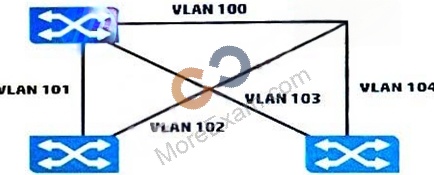
Question89: Refer to the exhibit.

The switches in the exhibit are all HP ProVision switches that run Multiple Spanning Tree Protocol (MSTP).
The network administrator wants all of the switch-to-switch links shown in the exhibit to be available for forwarding routed traffic. What should the administrator do to accomplish this?

Question90: What is one difference between Network Segment-based discovery and ARP-based discovery on HP Intelligent Management Center (IMC)?

Question91: Which statement is true concerning spanning tree protocols and HP switches?

Question92: A network administrator is managing an HP Comware switch from the CLI. Which action can the administrator only perform in User view?

Question93: A network administrator examines an HP Comware switch that is configured to route packets between VLANs. The switch is configured with multiple routing protocols. All routing protocols have learned of the same destination network. All routing protocols use the default administrative distances.
Which routing protocol does the switch select for the destination network?

Question94: Which statement is true about the default configuration on an HP ProVision switch?
Question95: A tagged frame arrives on a switch port that is not a tagged member of the VLAN indicated by the frame ID. What do fundamental VLAN operating rules require the switch to do with that frame?

Question96: Refer to the Exhibit.

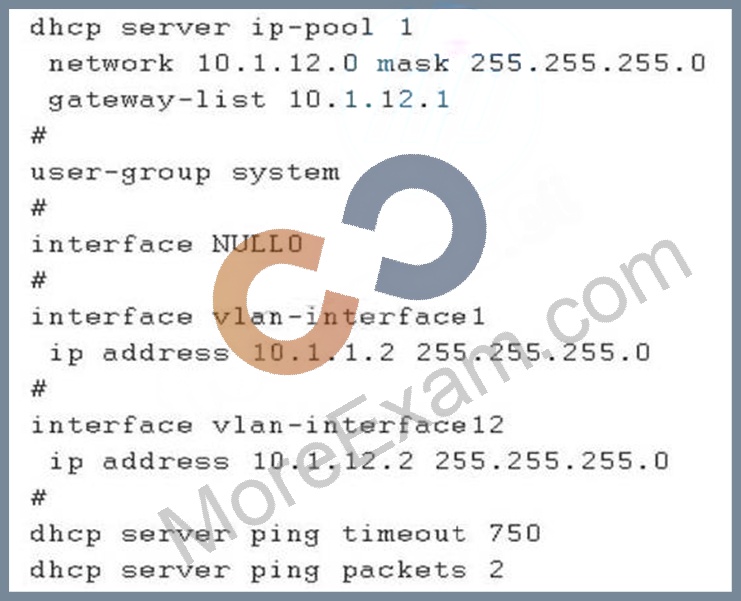
A network administrator has configured an HP Comware switch to act as the DHCP server for VLAN 12, but the switch is not responding to clients' DHCPDISCOVER messages. Based on the exhibit, what is the problem with the DHCP configuration?

Question97: An administrator is configuring OSPF on an HP ProVision switch. What is one of the steps that the administrator must take?

Question98: HOTSPOT
HOTSPOT
Match the description with the 802.11 standard. (Each option may be used only once.)

Question99: A network administrator wants an HP switch to use an IP address that is always up for its Open Shortest Path First (OSPF) router ID. Which address meets this requirement?

Question100: What is true about the community string used for SNMPv1 and SNMPv2c?

Question101: Which FlexNetwork architecture component provides high performance and low-latency for virtual and physical servers that provide services to the users in a company?

Question102: What does the traceroute command identify on an HP ProVision switch?

Question103: An HP switch learns identical valid routes with different protocols. How does the switch choose which route to add to its IP routing table?

Question104: A network administrator deletes old files in the flash file system of an HP Comware switch. The administrator then notices that the amount of free space available has not changed. Which command must the administrator execute to free up the space from deleted files?

Question105: Which statement is true about wireless technologies?

Question106: A company requires switches to use Multiple Spanning Tree Protocol (MSTP) instead of Rapid Spanning Tree Protocol (RSTP), so that the switches can forward traffic on more than one switch-to-switch link. How does the administrator set up the solution to meet this requirement?

Question107: Which term refers to aggregated links on HP ProVision switches?

Question108: Refer to the exhibit.

What does the output indicate about GE1/0/1?

Question109: A customer wants to implement multiple links between a server and a single HP Comware switch in order to increase the amount of bandwidth for more throughput. Which feature should the network administrator implement to accomplish this?

Question110: Refer to the exhibit.

The topology shown on the left of the exhibit illustrates a traditional three-tier architecture. Which technology allows a company to simplify their network with a two-tier topology as illustrated on the right of the exhibit.